
The Shift from List-Building to Consensus-Building
For more than two decades, organic search was built on comparative choice. If a user searched for a commercial litigation firm or an M&A advisory specialist, Google delivered ten blue links, often topped by aggregate directory lists or roundups. Searchers opened three or four tabs, compared options, and made an enquiry.
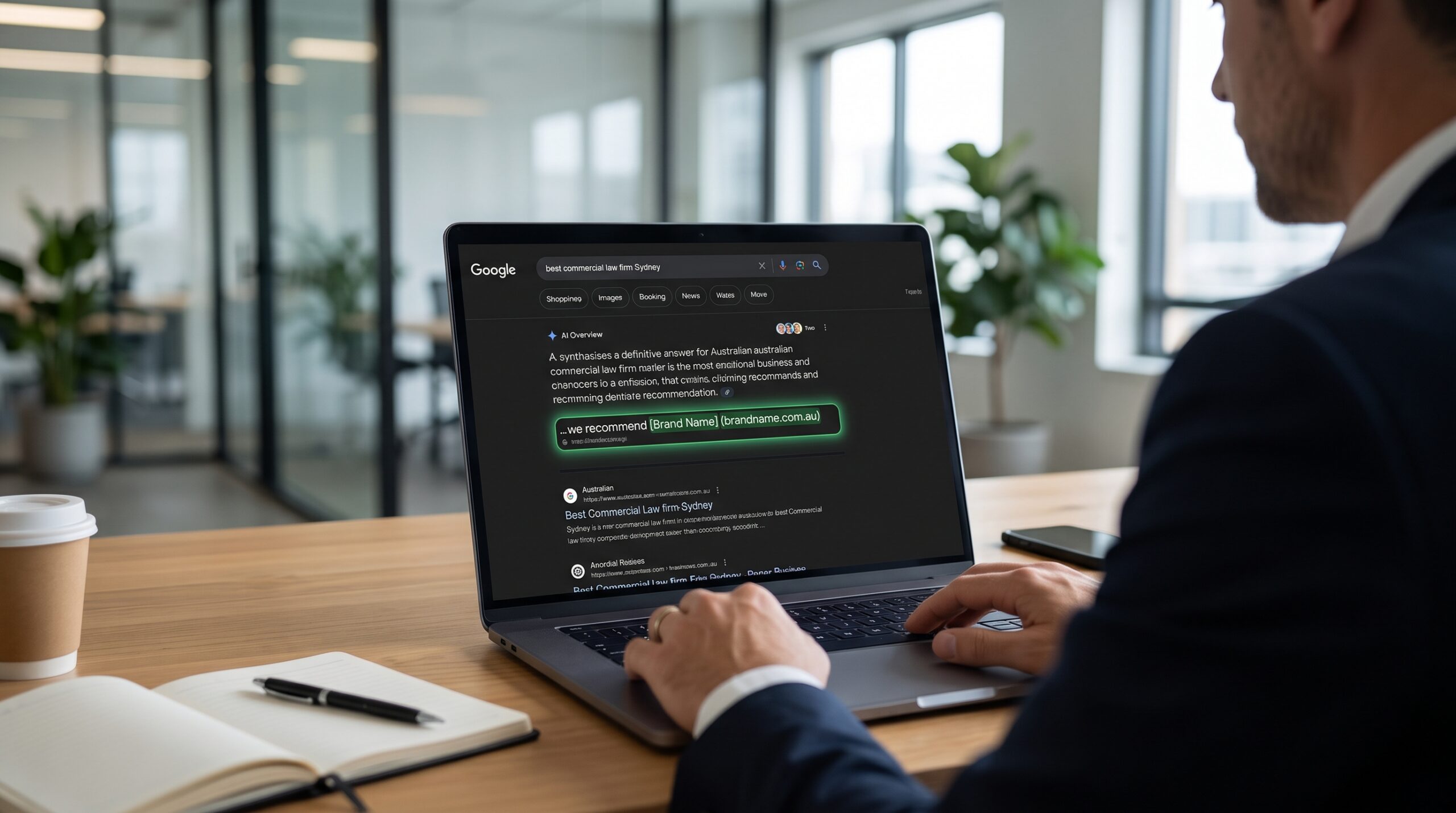
Google AI Overviews has rewritten that consumer journey. Rather than curating a list of alternatives, generative engines synthesise consensus into a definitive direct answer. When a user asks a high-intent commercial question, the engine now predominantly validates and cites a single market leader.
“AI search has officially shifted from list-building to consensus-building,” says Craig Wilson, Managing Director at Sticky Digital. “If your brand isn’t structured as the definitive, single authoritative answer in your niche, you risk becoming invisible in zero-click AI search results. The era of settling for spot three or four on page one and hoping for traffic is effectively over.”
The Mechanics of a Winner-Take-All Search Environment
This consolidation of citations creates a winner-take-all dynamic for high-value B2B and professional services keywords. Securing a traditional organic ranking in the top five results no longer guarantees that your brand will be referenced within Google’s AI summary at the top of the viewport.
Generative Engine Optimisation (GEO) relies on retrieval-augmented generation (RAG). The AI model evaluates thousands of indexed pages, extracts entity relationships, and queries trusted knowledge graphs to choose the single most reliable, authoritative provider to answer the query.
Being ‘among the best’ doesn’t cut it anymore when the AI only has room for one definitive recommendation. The algorithms are designed to minimise cognitive load for the searcher. If your digital footprint doesn’t project unmistakable authority across every platform the model inspects, that lone citation will go straight to your closest competitor.
Entity Trust, Domain Integrity, and the 30-Day Freshness Multiplier
Why does Google choose one firm over another when generating an AI answer? The latest visibility data highlights two decisive factors: deep entity trust and the recency of authoritative first-party signals.
AI models inherently favour domains that demonstrate verifiable entity authority; validated through consistent Google Business Profile signals, expert author credentials, and reputable industry citations. Furthermore, the data demonstrates that content updated or published within the last 30 days receives a 3.2x higher citation multiplier across generative engines compared to static, older evergreen pages.
“Generative models are obsessed with recency and factual reliability. Established Australian advisory firms already have decades of real-world authority, but many let their digital signals stagnate. An active, continuously refreshed domain that regularly injects first-party expertise into the market will systematically out-cite a passive competitor every time.”
3 Strategic Actions for Australian Professional Services Firms
To defend market share and capture the solitary prime citation spot in Google AI Overviews, Australian firms must transition from legacy SEO tactics to an AI-first GEO strategy:
- Establish Non-Replicable Entity Authority: Ensure that all legal, financial, and executive bios are tied to verified credentials, schema markup, and external industry directories. Generative engines demand clear evidence that your authors are accredited subject-matter experts.
- Implement a 30-Day Content Freshness Cadence: Audit core practice area pages, industry insights, and client guides regularly. Updating statistics, regulatory changes, and local Australian case examples every month signals to AI crawlers that your domain provides the freshest, most reliable retrieval source.
- Build Consensus Across Third-Party Platforms: Because AI models train and retrieve information from cross-web consensus, your authority must extend beyond your own website. Digital PR, verified customer reviews, local business citations, and industry commentary reinforce your position as the undisputed leader in your sector.
Partner with Sticky Digital
Transitioning your organic acquisition strategy to dominate Google AI Overviews and conversational answer engines requires specialist expertise in Growth Strategy and Generative Engine Optimisation (GEO).
To discover how Sticky helps leading Australian professional services firms secure definitive AI search visibility, contact Sticky Digital today to discuss a plan for your firm.