

Trimming Top-of-Funnel Waste to Protect Margin
In high-value professional services, broad impression-based marketing often creates an illusion of pipeline momentum while silently degrading profitability. Pumping budget into untargeted display networks or generic video views generates visibility, but rarely delivers the complex, high-margin advisory briefs that sustain commercial practices.
The current 3.4% contraction in broader ad spend reflects commercial directors demanding accountability. Mid-market practices are deliberately cutting low-yield display spend to concentrate budgets on active commercial demand: prospects specifically searching for insolvency specialists, commercial lease negotiators, M&A advisory, or corporate tax restructuring.
“A pulling back in broad digital ad spend isn’t a signal to stop marketing; it’s a call to refine your acquisition engine,” says Craig Wilson, Managing Director at Sticky Digital. “Firms that pivot budget into high-intent search and GEO citations will capture disproportionate market share while competitors pause. Trimming programmatic fluff to fund precision capture isn’t retrenchment; it’s capital efficiency.”
The Critical Mandate for Server-Side Precision and First-Party Signals
Reallocating funds into high-intent search channels requires far tighter tracking governance. When ad budgets are refined, every click must carry maximum signal density. Reliance on outdated, browser-based tracking pixels leads to signal loss, unrecorded conversions, and wasted spend across automated bidding algorithms.
To maximise efficiency on focused budgets, Australian professional services firms must establish robust first-party server-side data infrastructure. Deploying solutions such as Meta Conversions API (CAPI), Google Ads Enhanced Conversions, and GA4 Data Manager ensures that clean, offline conversion data (such as signed retainer agreements and qualified phone consults) is fed directly back to platform AI models.
“When you operate on leaner, high-intent ad spend, algorithmic machine learning needs pure data to work effectively. If your conversion tracking still relies on client-side browser cookies that get blocked by privacy controls, the ad networks are essentially flying blind. Investing in first-party data plumbing directly lowers your acquisition costs by training bidding models on your most lucrative clients.”
Capitalising on Competitor Retrenchment through Search & GEO
Market slowdowns present a predictable pattern: reactive businesses freeze marketing spend across the board, reducing competitive density in search auctions and organic real estate. For ambitious practices, competitor retreat opens an immediate opportunity to secure prime digital territory at lower cost.
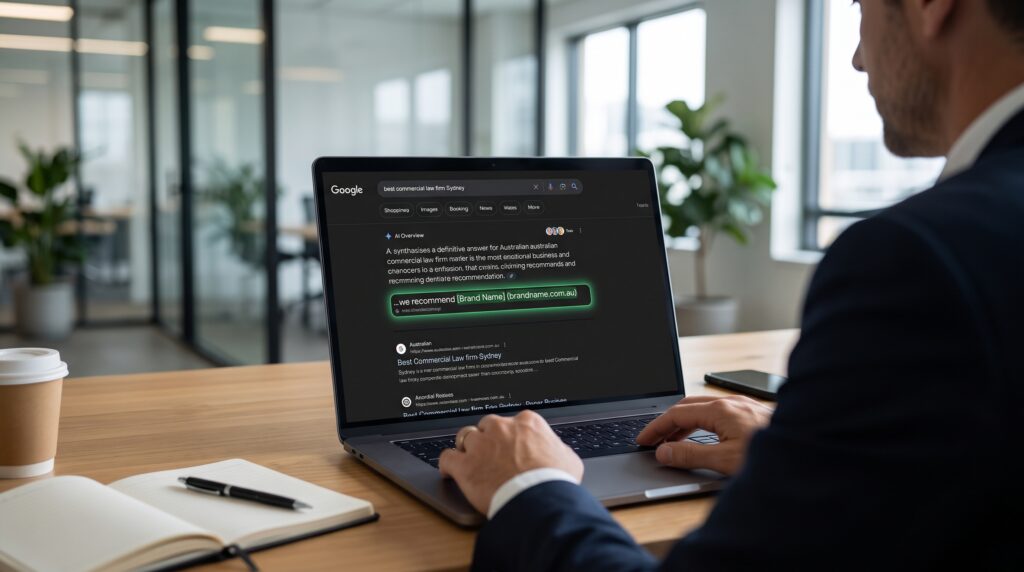
By pairing focused Google Search campaigns with Generative Engine Optimisation (GEO), Australian firms can dominate both the paid auction and the zero-click AI answers that executive decision-makers consult before signing an engagement letter.
3 Practical Steps for Australian Professional Services Firms
To adapt your digital media investment and capture qualified commercial enquiries in a tightening ad market, Sticky Digital recommends three immediate actions:
- Eliminate Top-of-Funnel Display WasteAudit your current paid campaigns across Google Ads and paid social. Cut broad, programmatic display placements and divert remaining spend strictly toward high-intent keyword themes and bottom-of-funnel commercial enquiries.
- Deploy First-Party Server-Side TrackingImplement server-side tracking (Meta CAPI and Google Ads Enhanced Conversions) connected directly to your CRM. Feeding closed-won lead signals back to search algorithms allows bidding models to optimise for actual fee revenue rather than raw form submissions.
- Consolidate Search Authority with GEO IntegrationReinforce your high-intent paid campaigns with Generative Engine Optimisation. Ensuring your practice leaders are cited inside AI answers across Google AI Overviews and ChatGPT creates a dual-engine acquisition model that outlasts competitors who simply turn off their ads.
Partner with Sticky Digital
Navigating changing ad market conditions requires a growth partner that blends deep paid media precision with next-generation AI Search Optimisation.
To learn how your firm can capture market share while improving client acquisition efficiency, contact Sticky Digital today to discuss your marketing.