
The Myth of the Universal AI Answer
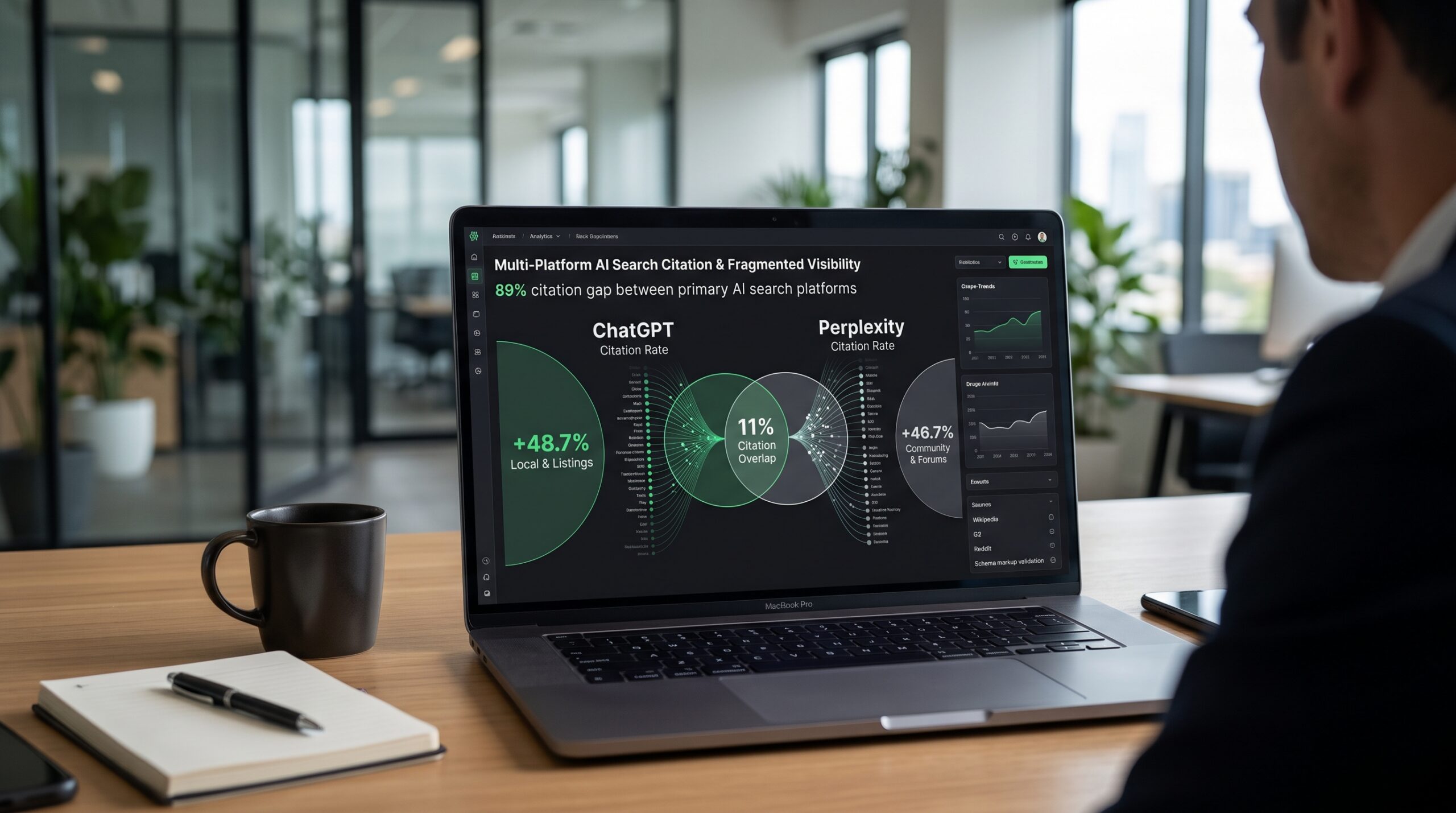
Many business leaders and marketers assume that the AI-driven search ecosystem behaves as a single, unified landscape. There is a common misconception that once a website ranks well or is optimised for “AI generally”, it will be surfaced similarly across Google AI Overviews, ChatGPT Search, and Perplexity. The 11% citation overlap data thoroughly debunks this.
Because these search-assisted AI models rely on dramatically different retrieval-augmented generation (RAG) pipelines, data gathering practices, and weighting systems, they view the same internet through completely different lenses. While one model may favour traditional, highly cited websites and official publications, another may pull heavily from real-time community threads or direct web data, leading to a massive 89% disparity in which brands are actually recommended to buyers.
“Optimising solely for Google organic rankings is now only half the battle,” says Craig Wilson, Managing Director at Sticky Digital. “If your digital acquisition model ignores platform-specific Generative Engine Optimisation, you are completely absent from where modern executive buyers conduct real-time research. When 89% of the recommendations don’t cross between ChatGPT and Perplexity, being highly visible on one means you might not even exist on the other.”
Multi-Engine GEO: Beyond Traditional SEO
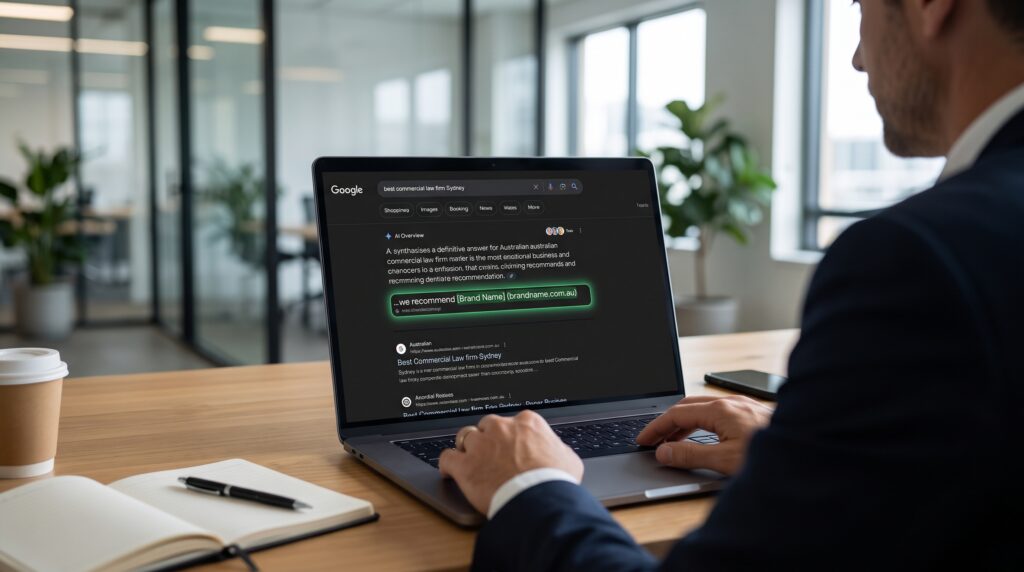
This deep platform fragmentation requires brands to abandon the “one-size-fits-all” mindset of legacy search tracking. For Australian businesses, having high organic search visibility is no longer a guarantee of AI citation. Many cited resources don’t even appear on Google’s first page, while domains that rank at the top can be entirely passed over by conversational engines looking for specific, synthesised, RAG-friendly content structures.
To win visibility, firms need a Multi-Engine Generative Engine Optimisation (GEO) strategy that actively targets these divergent patterns. Gaining traction on ChatGPT requires a focus on authoritative, structured entity signals and third-party validation, whereas visibility on real-time retrieval engines like Perplexity depends heavily on immediate, extractable answers, clear schema, and continuous updates.
“You can’t treat ChatGPT and Perplexity as the same channel. Perplexity is actively scanning the live web for highly extractable, fast-loading, structured data, whereas ChatGPT’s citations rely much more heavily on long-term entity trust, official organisational sources, and broader digital consensus. If you’re not optimising for both retrieval methods, you’re only covering a fraction of your buyer’s research paths.”
The Critical Role of Structured Data and Schema Primacy
Why do these AI engines select and display search results so differently? The answer lies in how they parse, extract, and verify information. Legacy SEO relied on human-readable content and backlinks to build trust. AI-driven search, however, is heavily dependent on machine-readable structures; particularly deep schema markup, JSON-LD, and transparent “answer-first” content architecture.
When an AI engine’s crawler inspects a website, it evaluates information based on “entity extraction” and clarity. An Australian professional services firm must ensure its data is not just present, but structurally effortless for an AI model to comprehend and trust. Unstructured, indirect, or complex narratives might be readable to a human, but they are frequently skipped by an AI model’s extraction layer in favour of competitors with clear, schema-backed data.
3 Practical Steps to Modernise Your AI Visibility
To ensure your Australian B2B or professional services firm can bridge this citation gap and capture the critical 89% of fragmented search visibility, Sticky Digital recommends three immediate adjustments to your digital footprint:
- Establish Multi-Engine Visibility AuditsAudit your brand’s presence independently across ChatGPT, Perplexity, and Google AI Overviews using realistic buyer prompts. Identify where your brand is being cited, where competitors are winning, and which search engines your target audience is relying on most.
- Deploy Advanced Schema and Transparent Case Study StructuresImplement deep, error-free schema markup (including Organisation, FAQ, and Article schema) to provide AI engine RAG models with clear machine-readable data. Avoid hiding case studies or pricing indicators behind complex layouts; make them structured, transparent, and easy for AI bots to identify and parse.
- Optimise for “BLUF” (Bottom Line Up Front) Content ArchitectureRe-evaluate how your website answers critical B2B search intent. Place direct, highly factual, and unvarnished answers within the first 150 words of your service and insight pages, directly beneath clear H2 headings, ensuring they are effortlessly extractable for AI citations.
Partner with Sticky Digital
As the business search landscape fragments, maintaining client acquisition requires a strategic partner that understands the mechanical and technical differences between traditional Search, Google AI Overviews, ChatGPT, and Perplexity.
To understand how your firm’s digital presence can earn authoritative, cross-platform citations, contact Sticky Digital today to discuss your AI Search and GEO plan.